We're forecasting an amazing spring!
Mark your calendars and check out books by Candace Savage and George Elliott Clarke. Brilliant writers and brilliant thinkers, these authors have made and continue to make great contributions to their various communities. Both events will be held at the Flin Flon Public Library. More details closer to the dates. In the meantime, happy reading!
Ore Samples Writers Series gratefully acknowledges support from Artists in Communities. Artists in Communities is a joint initiative of the Saskatchewan Arts Board and SaskCulture Inc., and is supported by funding provided by the Saskatchewan Lotteries Trust Fund for Sport, Culture and Recreation. Thank you to our community partners Flin Flon Public Library and Flin Flon Arts Council, and sponsors Hudbay and the Victoria Inn.
Friday, January 13, 2017
Sunday, October 2, 2016
Thank you to the Saskatchewan Poet Laureate
Thank you to Saskatchewan Poet Laureate Gerald Hill for the great reading in Creighton Community School on the occasion of Culture Days!
Thank you to him as well for the wonderful, well-attended workshop in Flin Flon. Thank you to the audience and the workshop participants. Thank you to the Town of Creighton and Creighton Community School for partnering with Ore Samples to bring the Saskatchewan Poet Laureate to our community for Culture Days. Thank you to Channa Senyk of Creighton Recreation for organizing the event and for being so great to work with. Thank you to all the sponsors for making this special occasion possible.
Friday, September 16, 2016
Driving That Line: Ore interviews visiting author Gerald Hill
Ore Samples aims to bring some of Canada’s finest,
critically-acclaimed professional writers north to connect with local readers,
local literary, visual and performing artists, and anyone engaged with and
invested in the vibrant local arts scene. The 2016-17 lineup is stellar.
Gerald Hill:
Ore:
Though published in 2008 long before your tenure
as Saskatchewan Poet Laureate began, these
lines from a poem called “Just Wind” in your book My Human Comedy can be said to “raise awareness of the power of
poetry and the spoken word,” the fourth objective of the Poet Laureate program
as posted on the Saskatchewan Writers’ Guild website. I’ve copied the
objectives here:
This would be about engaging with the local
cultures—what people do in their various communities—trying to draw out
expressive activities. It would be a mapping, auto-geographies of people where
they are in the province.
On Saturday,
October 1, we’ll welcome Saskatchewan Poet Laureate Gerald Hill to our community. The Town of Creighton, Creighton Community School, and Ore Samples Writers Series worked in cooperation to bring him here through the Poet Laureate program. He’s been invited to give a
presentation and reading at the Creighton Community School Library at 2 pm on
the occasion of Culture Days. He will also offer a writing workshop titled
“Driving That Line” in the Seniors’ Room at the Flin Flon Community Hall from
4:30-5:30 pm.
A two-time
winner of the Saskatchewan Book Award for Poetry, Gerald Hill published his
sixth collection, Hillsdale Book, with NeWest Press and A
Round for Fifty Years: A History of Regina's Globe Theatre with Coteau
Books, both in 2015. In the fall of 2015 he was Doris McCarthy
Artist-in-Residence at Fool's Paradise, on the Scarborough Bluffs in Toronto.
He lives and writes in Regina.
Gerald Hill took
the time to entertain a few questions ahead of his visit. Conversation
starters, if you will.
Ore:
“You are entering Hillsdale, a southern suburb of Regina.” The “Foreword”
of Hillsdale Book goes on to provide a brief look at your history
with the place and serves as a kind of map by which to read the book. In the “Acknowledgements” at the end you
address our reading experience: “Readers are advised to take caution, if they
don’t mind, with assumptions about the truth of names, events or locations they
meet here. This is a work of fact made of fiction and fiction made of fact.”
What role does imagination play in the compilation of research, archival
documents, anecdotes, stories, and photographs, and in the eventual distillation
of the place and its particular truths?
Gerald Hill:
If we accept that imagination is an act of language, then
it’s everything. Even facts when set in language, as they cannot help but be,
are subject to it. In fact, all of the tasks named in the question go better
when aligned somehow with some framework, some lead, some question that has
been imagined. At the crossroads of possible routes, like all crossroads
bedevilled by an other-seeking spirit, imagination shines.
However, that may not be quite what you mean by the term.
I’m willing to make up names (a private joke, for my own amusement, is to use
friends’ names, or parodies of their names, in my poems) or events or locations.
Such making up doesn’t come at the cost of truth. The truth always needs
imagining.
Ore:
The late Robert Kroetsch is an important figure in Canadian
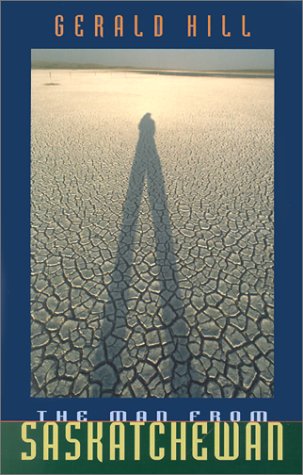
literature and his influence on your work is evident. In your book The Man from Saskatchewan, published in
2001, there’s a section titled “Poems for that Stone Hammer (for Robert
Kroetsch)”. In Hillsdale Book,
published in 2015, the “Kroetsch Park: A Subdivision” section opens with a
quote by Robert Kroetsch. In the poem “Paterson in Kroetsch Park” that follows,
the speaker questions Kroetsch “further on the subject of / the
docu-autogeography.” Can you tell us what “docu-autogeography” means and how it
applies to your writing process?
Gerald Hill:
It’s a gag term. But about ten years ago when I began to
make Hillsdale Book, I called what I
was doing autogeography—the reckoning of self (auto) in place (geo) in
writing (graph). I asked a geography
prof I know if he’d ever heard of the term and he said no. For a while, Hillsdale, an Auto-geography was the
title of the book (then I labelled the file “Hillsdale book” and kept the label
so long it turned into the title of the dang book).
I evoke Kroetsch along these lines because that’s what he
did: run with geography (and history and nation and body) as he ran with self.
And with the extract you quoted I was thinking of all kinds of work out there,
in all kinds of artistic disciplines, that involves the artist offering a
version of self-in-place. My book names several of these works from the
literary side that inspired me.
Finally, to address your question more directly, I would say
that everything I do is more or less documentary, more or less auto, more or
less placed. I admit it! I don’t see it as a limit. I see it as all I can do as
an artist.
Ore:
“Sister 2 is
hosting Sorority initiation, Stigma Lamborghini Chai.
She’s the
President. We’re told not to set foot downstairs.
“Especially
you” [to me]. “I don’t want any of your comedy routines.”
This from “What Sisters Have to Say” in Hillsdale Book is a good place to stop
and talk about the role of humour in your work. In Heartwood, your first book, playful titles like “Better Poems and
Gardens” and “Hill Sides” lure us into the poems. Together the language play
and playful line breaks in your book Getting
To Know You create captivating energy pulling us ever closer to the speaker
and the place, both physical and psychological, the speaker inhabits: “Rock-a-bye,
maybe / I’ll fall asleep out here” says the speaker in “I Dreamed I Fell
Asleep” from the “Emma by Rowboat” section and there we, the readers, are
bobbing along in a life we recognize. In your two latest books of poetry, 14 Tractors and Hillside Book, you’ve gone further, finding humour in the documents
and stories you’ve collected and bringing a version thereof to the page,
creating a recognizable community, opening and furthering lines of thought, and
deepening the experience of place. How does humour drive the way you process the
world around you? Does it lead? Follow? Mislead?

I think language use is inherently funny. Since a
word can never be the thing it represents, there is always slippage—that banana
peel, some poor sap falling on his/her noggin, it might be.
Besides, a laugh means the laugher has gone
somewhere new. We don’t laugh much at connections already made (though many is
the time I’ve been woken in the middle of the night by my own chuckles, some
stupid thing from twenty years ago). Unless it puts us down, humour opens to surprise,
open-ness, play—all of this new. Might come in handy when we get to whatever
story we’re telling.
But to answer your question, I’m quoting Carole
King: “where you lead, I will follow.” Once I’ve made myself laugh at what I’ve
written, only hard labour can get me out of it.
Ore:
“Wind’s a bully and the poets,
like Virgil in Dante’s hell, order it low
in its black boat to wait there till it’s needed.
Poets are lucky to make words
do that sort of thing[…]”
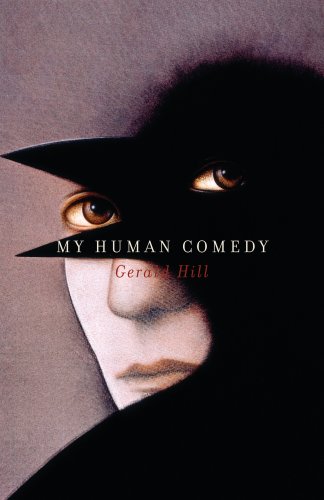
Though published in 2008 long before your tenure
as Saskatchewan Poet Laureate began, these
lines from a poem called “Just Wind” in your book My Human Comedy can be said to “raise awareness of the power of
poetry and the spoken word,” the fourth objective of the Poet Laureate program
as posted on the Saskatchewan Writers’ Guild website. I’ve copied the
objectives here:- To
celebrate the spirit of the people and place of Saskatchewan
- To
raise the profile of writers in Saskatchewan
- To
elevate writing as a vocation
- To
raise awareness of the power of poetry and the spoken word
- To
create a recognized spokesperson for writing in general and poetry in
particular who will be a respected participant of festive occasions and
official functions in the province
- To
be a focal point for the expression of Saskatchewan cultures (time, land,
people) through the literary arts
It’s fair to say you’ve excelled at every one of
these over the course of your career. Do you have any additional objectives in
mind as you go about your official duties?
Gerald Hill:
Here I could re-visit all the terms you’ve raised
in your excellent questions. I would like to help re-imagine what the Poet
Laureate position can be—more than just what it always was. I’d like to trade
places with the Saskatchewanderer program (which runs through Tourism, I think)
and be able to roam the province. I’d look for odd stories and see if I could animate
communities in literary ways.
This would be about engaging with the local
cultures—what people do in their various communities—trying to draw out
expressive activities. It would be a mapping, auto-geographies of people where
they are in the province.
And I want to play with the position, as in my
series of poems that claim nothing but positive effects, from the trivial to the
profound, of my becoming poet laureate. As imagined in past years, the position
has been a tad ceremonial, which need not, of course, exclude a spot of fun.
I have no illusions about becoming a voice for the
advancement of poetry in Saskatchewan. Not enough people pay attention to it.
But poetry, like all the arts, can take us to a deeper, more textured
experience of being alive where we are. It can both reinforce and transform who
we are.
Catch the Saskatchewan Poet Laureate on October 1
The Town of Creighton, Creighton Community School, and Ore are working in cooperation to bring Saskatchewan Poet Laureate Gerald Hill to our community for Culture Days. Please join us.
Thank you to all the sponsors for making this special occasion possible.
Thursday, September 15, 2016
The September 15 Ore was brilliant
The September 15 Ore at the Flin Flon Public Library was fantastic! Thank you to visiting author Wendy McGrath for a terrific, well-attended workshop. Thank you to Wendy McGrath, Sarah Trevor, Ann Ross and Doug McGregor for their wonderful readings and performances at the event that followed. Thank you to the great audience. Thank you to the community, the sponsors, and the local media for their engagement with the arts and for making great things like this happen.
Ore Samples Writers Series gratefully acknowledges support from Artists In Communities. Artists in Communities is a joint initiative of the Saskatchewan Arts Board and SaskCulture Inc., and is supported by funding provided by the Saskatchewan Lotteries Trust Fund for Sport, Culture and Recreation. We acknowledge as well the support of the Canada Council for the Arts and the League of Canadian Poets. Thank you to our community partners Flin Flon Public Library and Flin Flon Arts Council, and sponsors Hudbay and the Victoria Inn.
Tuesday, August 30, 2016
The Images Inside: Ore interviews visiting author Wendy McGrath
Ore Samples aims to bring some of Canada’s finest,
critically-acclaimed professional writers north to connect with local readers,
local literary, visual and performing artists, and anyone engaged with and
invested in the vibrant local arts scene. The 2016-17 lineup is stellar.
Ore:
I’d describe my
creative process as multi-layered. With “A Revision of Forward” the creative
process was lengthy. Walter Jule and I started a collaborative
poetry-printmaking project some 12 years ago, so those initial poems I wrote
inspired by ethereal artist’s proofs on ephemeral but tough Japanese gampi paper, and those first prints have
evolved over time and over the collaboration into the eponymous long poem in
the collection. Some of the other poems in “A Revision of Forward” have
provided Walter with inspiration for additional prints. It’s interesting, too,
because Walter has incorporated 3-D elements into some of the prints—so the
project seems to have a life of its own. Generally speaking, though, my writing
is triggered by a sensory experience, which could be anything, really, and then
I might look for connections and links and listen for what I’m being told to do
with this experience. The creative process for me is about transformation,
transmutation, and transubstantiation—“everything always becomes something
else.”
“It was like
she was inside the radio in the car and the songs were inside her body.” This
is from a tension-filled passage in North
East describing the journey from Edmonton to visit relatives in
Saskatchewan. The relationships, the expansion and compression of distance and
space, openings and closings, the inside and outside, the real and imagined, the
contained and the uncontainable, create an almost unbearable pressure. You were
born in Prince Albert and live in Edmonton. How have your writing life and
sensibilities been shaped by the places through which you travel?
The third of the
series, set to take place on September 15 at the Flin Flon Public Library,
features visiting author Wendy
McGrath. Wendy McGrath has written
three novels and two books of poetry. Her most recent poetry collection is A Revision of Forward (NeWest Press
2015) the culmination of a decade-long collaboration with printmaker Walter
Jule. She is currently at work on the final novel in her “Santa Rosa Trilogy”
as well as another poetry collection and a collection of essays.
Wendy McGrath took
the time to entertain a few questions ahead of her visit. Conversation
starters, if you will.
Ore:
Your
remarkably long and productive collaboration with internationally renowned
printmaker Walter Jule has led to exhibitions and to your latest poetry
collection A Revision of Forward. In
the Afterword, Jule explains how a statement by you inspired the creation of a
new course titled “Word and Image” in the printmaking curriculum at the
University of Alberta. I was particularly taken with how he captures the
experience of reading your work: “As I became more familiar with McGrath’s
writing I was struck by references to memory (cerebral and haptic) of the
physical world: particular shapes, colours, smells and an overarching sense of
what I can only call the circularity of time, an intuition that past and
present can be simultaneous without destroying the temporal sequence of before
and after.” The repetition of “becomes
something else” at the end of each stanza of “Sub Terra,” a poem of great subtlety
that deals on the surface with a flooding basement, is an outstanding example of
the way design and rhythm contribute to this striking effect. Can you tell us a
bit about your creative process? Or let me put the final line of that poem to
you: “Wendy, why is it with you everything always becomes something else?”
Wendy McGrath:
I’d describe my
creative process as multi-layered. With “A Revision of Forward” the creative
process was lengthy. Walter Jule and I started a collaborative
poetry-printmaking project some 12 years ago, so those initial poems I wrote
inspired by ethereal artist’s proofs on ephemeral but tough Japanese gampi paper, and those first prints have
evolved over time and over the collaboration into the eponymous long poem in
the collection. Some of the other poems in “A Revision of Forward” have
provided Walter with inspiration for additional prints. It’s interesting, too,
because Walter has incorporated 3-D elements into some of the prints—so the
project seems to have a life of its own. Generally speaking, though, my writing
is triggered by a sensory experience, which could be anything, really, and then
I might look for connections and links and listen for what I’m being told to do
with this experience. The creative process for me is about transformation,
transmutation, and transubstantiation—“everything always becomes something
else.”
Ore:
Compact and
complex, your novels bring alive the workings of perception, memory and imagination
during the formative years. Partway through Santa
Rosa, the five-year-old protagonist (who, we learn earlier, is learning to
read and write while navigating her parents’ disintegrating relationship),
observes the luncheonette: “Red and white tile floors like teeth or piano keys
from a piano and the keys could be any colour she chose. The music would be
hers and would taste the colour of the keys. The sound: the colour. Would red
keys really make the music sound different? She could taste each letter their
sound their music.” In North East she
tastes colours a number of times. Intrigued, I looked up synesthesia, thought
about sense impression and creative expression, reviewed the normal cognitive
development of a child, but none of this explains how to make the sensory
experience and thoughts of a five-year-old character believable on the page. Can
you give us some insight into how you achieved this?
Wendy McGrath:
The narrator in both Santa Rosa and North East is channeling the observations of the child protagonist,
so that narrative voice was tricky to maintain. I had to balance the child
protagonist’s insightful observations with her lack of understanding of what is
actually going on. It wasn’t going to work if the child protagonist was too
precocious, too cheeky, too knowing. When I worked on Santa Rosa and North East,
I had to be conscious of what a child could actually interpret about what was
happening around her and what the reader would then draw from those observations.
I scrapped quite a bit of material along the way. The child protagonist can’t
offer insight into why something is the way it is or why someone around her is
behaving a certain way, but, she can render those observations in a way that
allows the reader to be “in the know.” The child protagonist can’t be too aware,
it wouldn’t ring true, but, she can have tremendous insight and sensitivity. I
tried to posit myself in the time and place of the novels’ protagonist, remembering
what it was like to be that age and to know that there is a world around you
that you have no way into—physically or psychologically. Christine’s
synesthesia does, however, allow her another dimension of cognition—albeit it
is very much her own way of interpreting the world around her, herself and, as
we see as she grows older, her creative and artistic growth. With Christine’s
synesthesia, the reader knows what’s going on but Christine doesn’t have the
experience and vocabulary to label it. She simply thinks this is normal and
doesn’t attach a definition to these experiences, they simply are. She has no
way of knowing that everyone else is not experiencing the world in the same way.
I tried other narrative styles for the books, but, having a narrator filter the
experiences of the child protagonist created a kind of distance, a filter, the
kind of dream-like quality that I wanted where the characters move through the
novel like ghosts.
Set in 1960s
Edmonton, Santa Rosa and North East are, like your poems, richly
detailed. What attracts you to this time and place, how did you go about the
research, and how do you curate the detail?
Wendy McGrath:
This was the time and
place of my childhood and, when I started the Santa Rosa trilogy, I was
reflecting on my own family in that time and place in Edmonton. The
neighbourhood of Santa Rosa had been absorbed into another community by vote of
city council so, just like that, an old working-class neighbourhood disappeared.
What did that disappearance mean? I extended that idea to the people that lived
in that neighbourhood—their small tragedies, their triumphs, their
experiences—where did they go? I imagined them as ghostly presences that exist
in another sphere somewhere, so I put them on the page. I try to immerse myself
in the time and place I write about: the objects, the products. I visited the
Edmonton City Archives, looked at old photographs, and listened to the music of
the time. I became the time and place.
Ore:
“It was like
she was inside the radio in the car and the songs were inside her body.” This
is from a tension-filled passage in North
East describing the journey from Edmonton to visit relatives in
Saskatchewan. The relationships, the expansion and compression of distance and
space, openings and closings, the inside and outside, the real and imagined, the
contained and the uncontainable, create an almost unbearable pressure. You were
born in Prince Albert and live in Edmonton. How have your writing life and
sensibilities been shaped by the places through which you travel?
Wendy McGrath:
My family travelled
“home” to Saskatchewan from Edmonton a lot when I was a child. We made the
trips in different seasons, set-out at different times of the day (or night).
Looking back on those journeys, every trip seems unique but then, at the same
time, they also blur together—we’d tick off the towns as we passed them every
10 miles and we’d listen to different music on the radio, different announcers
and ads. There were trips where my mother read entire books to us: Little Women, Hans Brinker and the Silver
Skates…the cloistered space of the car was both comforting and
disconcerting. We felt safe in the backseat with our blankets and pillows but
my parents often seemed to be talking a different language when I listened to
them (while pretending to be asleep). There was always excitement when we got
ready to go to Saskatchewan, packed up the car and took off. That same sense of
excitement—of travelling toward and away from one place to another is still
with me no matter where I go now as an adult. Those childhood trips to Saskatchewan
showed me that worlds can exist at the same time in different places and it
also gave me a real sense of time and distance passing—those long stretches of
prairie highway where you seem to drive into the horizon forever.
Workshop with visiting author Wendy McGrath
Join us for a writing workshop with visiting author Wendy McGrath on Thursday, September 15. A great opportunity to learn, add to your resume, and experience something new.
Subscribe to:
Posts (Atom)


